EMG and Nerve Conduction Studies in Phoenix: What to Expect Before, During, and After Testing
Nov 02, 2026
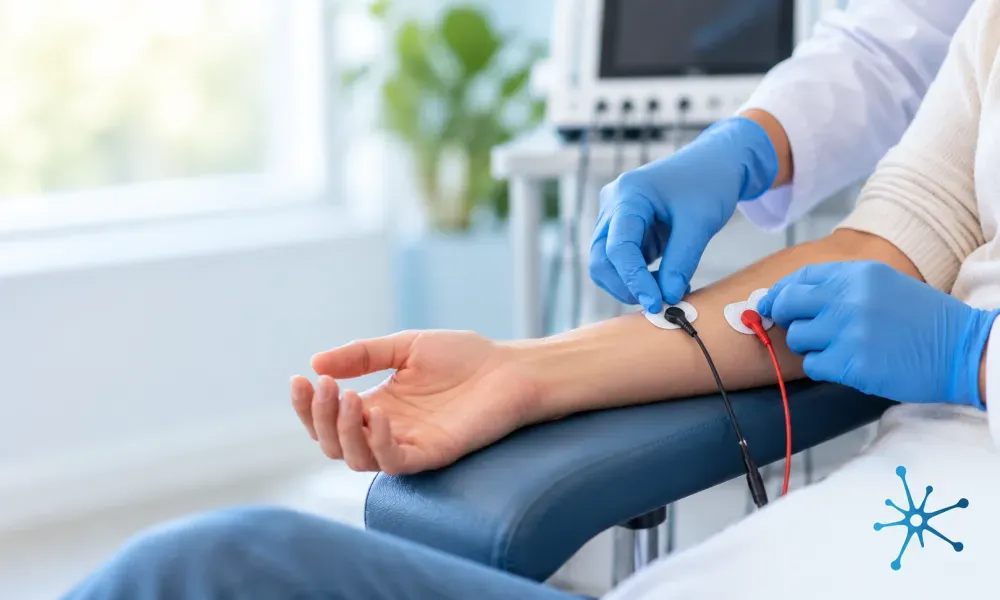
When numbness, tingling, burning pain, muscle weakness, or unexplained changes in movement continue, it can be difficult to know what information will help move a medical evaluation forward. An electromyography (EMG) and nerve conduction study (NCS) are diagnostic tests that can give a neurologist more detail about how nerves and muscles are functioning. For adults in Phoenix, understanding what happens at an EMG and nerve conduction study can make the appointment feel more manageable and can help you arrive prepared.
These tests are not a diagnosis by themselves, and they do not replace a conversation about your symptoms, health history, examination, and other testing. They are one part of a larger evaluation. The goal is to collect useful information that your care team can interpret in context. This guide explains why an EMG or NCS may be recommended, what the visit commonly includes, how to prepare, and what questions can be useful to ask.
Nerves carry signals between the brain, spinal cord, muscles, and skin. Muscles respond to electrical messages delivered through nerves. When a nerve is irritated, injured, compressed, or affected by a medical condition, its signals may change. An EMG and NCS can help examine parts of that signal pathway.
A clinician may discuss EMG and nerve conduction studies when symptoms include persistent hand or foot numbness, pins-and-needles sensations, burning discomfort, muscle cramps, weakness, pain that travels down an arm or leg, or a change in muscle control. The test may also be considered when symptoms raise questions about a pinched nerve, peripheral neuropathy, carpal tunnel syndrome, a nerve-root concern in the neck or back, or a muscle condition. Symptoms can have many possible causes, so the test is used alongside your individual evaluation rather than as a shortcut to an answer.
Not every symptom calls for EMG or NCS testing, and a normal result does not dismiss a person’s symptoms. The clinician ordering the study can explain why it may be useful for your particular situation and how it fits with the rest of your care.
Although people often refer to the visit as an “EMG,” it may include two related tests. A nerve conduction study measures how electrical signals travel through selected nerves. Small surface electrodes are placed on the skin, and brief electrical stimulation is used to record the nerve’s response. The sensations are usually brief. The number and location of nerves tested depend on the symptoms and the clinical question.
An EMG evaluates the electrical activity of selected muscles. A small, thin needle electrode may be used to record activity from a muscle while it is resting and while it is gently activated. The provider selects muscles based on the symptoms, examination, and purpose of the study. You may be asked to relax, move a particular body part, or gently tighten a muscle for a few seconds.
The two parts offer different kinds of information. NCS focuses on nerve signal transmission, while needle EMG looks at muscle electrical activity and how a muscle is receiving input from nerves. Some visits include both portions; in other situations, the clinician may determine that one part is most appropriate. The exact plan is individualized.
Most visits start with a brief review of the concern that led to the study. Be ready to describe where symptoms occur, when they began, whether they come and go, what makes them better or worse, and whether you have noticed weakness, balance changes, or sleep disruption. Let the team know about prior surgeries, injuries, diabetes, thyroid concerns, autoimmune conditions, chemotherapy exposure, and any family history that may be relevant. A focused examination may be repeated before testing.
For nerve conduction testing, the skin is prepared and electrodes are placed in specific locations. A short electrical pulse is delivered to a nerve, and a recording electrode measures the response. The sensation can be surprising the first time, but it is brief. Your clinician or technician can tell you what to expect before each step and can pause if you need a break.
For the needle EMG portion, the skin is cleaned and the recording electrode is placed in selected muscles. You may feel a quick pinch or pressure with insertion and temporary soreness afterward. The provider will guide you through relaxation and gentle movements. The study is performed carefully and the number of muscles tested is based on the clinical question, not on a one-size-fits-all list.
Appointment length varies. Many studies take roughly 30 to 90 minutes, depending on the body area being evaluated and the complexity of the symptoms. Plan enough time so that you are not rushing. If you are concerned about discomfort, anxiety, mobility, a language need, or any accommodation, mention it when scheduling or at the start of the visit.
Simple preparation can improve comfort and reduce delays. Your scheduling team may give specific instructions, and those directions should take priority. In general, arrive with clean, dry skin and avoid lotions, creams, oils, or sunscreen on the arms and legs that will be tested. These products can make it harder for electrodes to adhere and may affect recording quality.
Do not stop prescribed medications on your own for an EMG or NCS. Ask the clinician who ordered the test, or the testing office, whether any medicine-specific instructions apply to you. It is especially important to mention anticoagulants, antiplatelet medicines, implanted cardiac devices, and skin infections or open areas near the planned testing site. The team can review safety considerations and decide how to proceed.
Wear comfortable clothing that allows access to the area being evaluated. A short-sleeved shirt, loose shorts, or layers that can be removed easily may be helpful. If cold temperatures tend to worsen your symptoms, bring a light layer for the waiting area; warm limbs can help produce clearer nerve-conduction recordings.
Most people return to usual activities right away, although the tested muscles can feel mildly sore or bruised for a short time. If an electrode site is tender, gentle care and normal activity modification may be enough. Your care team can advise you if you have a question about a specific activity, medication, or symptom after the test.
Results are interpreted together with your symptoms, examination, and medical history. In some settings, preliminary information may be discussed at the end of the visit. In others, the ordering clinician reviews the report and contacts you with next steps. The report may use technical language; ask your neurologist to explain what the findings mean for you and what they do not show. A test result is most useful when it guides a clear next conversation.
EMG and nerve conduction studies are outpatient diagnostic tests, not emergency care. Call 911 or seek emergency evaluation for sudden facial drooping, new trouble speaking, sudden one-sided weakness or numbness, loss of consciousness, severe chest pain, severe shortness of breath, a sudden severe headache, or rapidly worsening symptoms. These can be signs of a medical emergency and should not wait for a testing appointment.
For new or worsening numbness, weakness, pain, falls, or loss of bladder or bowel control that is not an emergency but needs prompt attention, contact your clinician or the office that is managing your care. Tell the team how quickly symptoms changed and how they affect daily activities.
Writing these questions down can help you leave with a better understanding of the plan. If a family member or support person helps you manage appointments, ask the office whether they may accompany you according to current office policy.
The experience varies. Nerve stimulation feels like a brief electrical pulse, and the needle portion can feel like a quick pinch or pressure. Your clinician can explain each step, adjust positioning, and pause if needed. Let the team know if you have significant anxiety, a history of fainting with procedures, or concerns about pain.
Many people drive themselves and return to normal activities after testing. If you have mobility limitations, severe symptoms, feel anxious about the procedure, or were given medication that affects alertness for another reason, arrange transportation or ask the office for guidance.
No single test answers every question. An EMG and NCS examine selected nerves and muscles. Results may be normal even when symptoms are real, and some conditions are better evaluated with a different test, imaging, laboratory work, or follow-up examination.
Timing varies by practice and by the reason for testing. Ask at check-in whether the result will be discussed that day or sent to the clinician who ordered the study. Avoid interpreting isolated technical terms from a report without clinical context.
Center for Neurology and Spine provides neurology care for adults in Phoenix, including electromyography, nerve conduction studies, and evaluation for a range of neurological concerns. If persistent numbness, tingling, weakness, or pain is interfering with work, sleep, movement, or daily life, a neurology visit can help determine whether EMG or NCS testing is appropriate. Call 623-257-6038 or use the practice’s online booking option to request an appointment.
This article is for general education and is not a diagnosis, a substitute for an examination, or individualized medical advice. A qualified clinician who knows your history can advise you about testing and treatment decisions.
An EMG and NCS report records technical observations, but the value of the study comes from connecting those observations to the whole clinical picture. A finding may support a suspected nerve compression, show a pattern that warrants closer review, or help narrow the list of possibilities. Sometimes the result points away from a nerve or muscle explanation and helps the clinician decide which evaluation should come next. That can still be useful progress when symptoms have been difficult to explain.
Results are not a scorecard and do not measure effort, pain tolerance, or the importance of a symptom. A person can have a meaningful symptom even if a study does not identify a clear abnormality. Your neurologist may consider the location and timing of symptoms, physical examination, prior imaging, laboratory testing, medical conditions, and response to previous treatment before making recommendations. Ask how the findings do or do not fit with your specific concern.
The terminology around electrodiagnostic testing can sound intimidating. “Conduction velocity” refers to the speed of a nerve signal. “Amplitude” describes the size of a recorded response. “Latency” is the time it takes a response to begin after stimulation. These measurements are compared with expected ranges while accounting for factors such as temperature, age, body area, and the testing technique. A number outside a reference range is not interpreted in isolation.
You may also hear terms such as neuropathy, radiculopathy, entrapment, demyelination, or axonal loss. These are descriptive patterns, not conclusions you should apply to yourself after an internet search. For example, radiculopathy refers to a problem involving a nerve root near the spine, while entrapment refers to a nerve being compressed along its path. Your clinician can explain whether a term appears in your report, what degree of certainty is appropriate, and whether it changes the plan.
After results are available, bring the same practical focus you used to prepare for testing. Ask what the findings suggest, what remains uncertain, and whether the plan includes observation, treatment, therapy, additional testing, or a follow-up interval. If symptoms are changing, share concrete examples: a task you can no longer do comfortably, how far numbness travels, how often a hand wakes you at night, or whether you are dropping objects. Those details can help make a follow-up conversation more useful.
If you receive care from more than one clinician, ask who will coordinate next steps and whether the EMG report should be shared with your primary care clinician, surgeon, therapist, or other specialist. Keep a copy of the report in your personal records if the office provides one. Clear communication helps every member of the care team work from the same information.