First Seizure or Fainting? When Phoenix Adults Need Urgent Neurology Care
Nov 08, 2026
Seeing someone lose awareness, fall, shake, or become confused can be frightening. A seizure and a fainting episode can sometimes appear similar to a bystander, but they are not the same event and can have different causes. If an adult has a first seizure-like event, a loss of consciousness, or an unexplained collapse, medical evaluation matters. The safest next step depends on what happened, how long it lasted, and whether there are ongoing symptoms or injuries.
For adults in Phoenix, it can be tempting to wait and see whether a new health change fades with rest, a calmer week, or better sleep. That is understandable. Still, a symptom pattern that is new, recurring, worsening, or interfering with daily life is useful information for a neurology visit. The goal is not to self-diagnose from a search result. The goal is to notice the pattern clearly enough that a qualified clinician can put it in context.
A seizure can involve changes in awareness, behavior, movement, sensation, or memory. Some people have convulsive movements; others may stare, become briefly unresponsive, make repeated movements, experience unusual sensations, or be confused afterward. Fainting, also called syncope, often involves a brief loss of consciousness related to a drop in blood flow to the brain. Because descriptions can overlap, it is important not to label an event based only on one visible sign.
A useful account includes what happened immediately before the episode, whether the person was standing or sitting, any warning symptoms, the length of the event, movements or color changes observed, breathing, tongue injury, loss of bladder control, injuries, and how long it took to return to usual awareness. If it can be done safely, a bystander’s written notes can be more accurate than a memory reconstructed days later. Do not put anything in a person’s mouth or try to hold them down during a seizure-like event.
Timing, context, and change over time can be as important as the symptom itself. A note such as “it happened once” is less useful than noting when it began, what you were doing, how long it lasted, what else you noticed, and whether it is becoming more frequent. That information does not prove a cause, but it helps make a focused conversation possible. It also helps avoid treating every unusual sensation as identical.
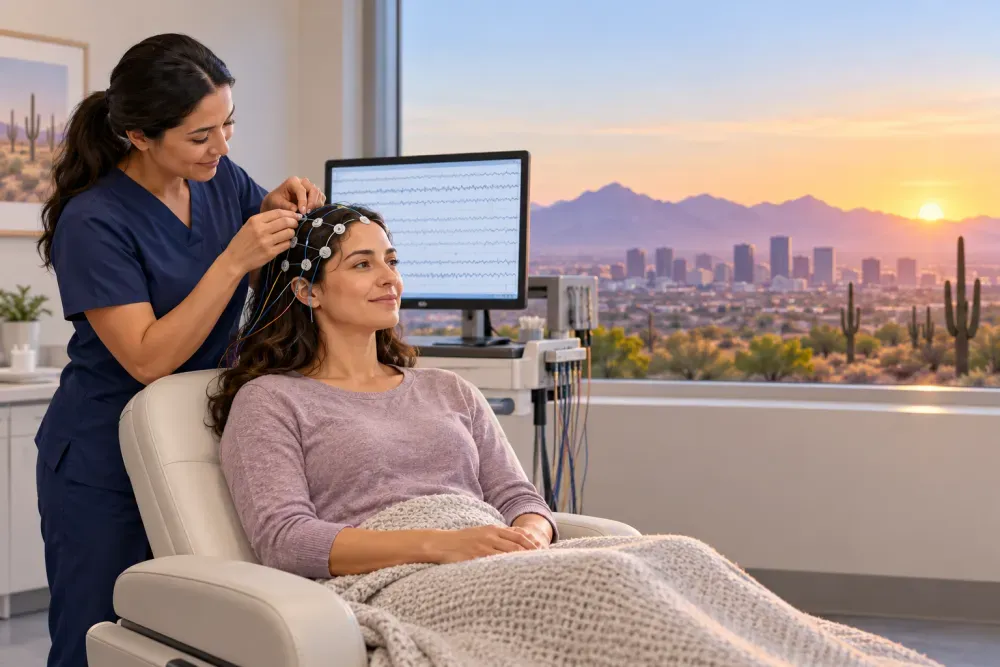
Phoenix adults with seizure-like episodes may need evaluation that considers neurologic, cardiac, metabolic, sleep-related, medication-related, and other possible factors. Center for Neurology and Spine provides epilepsy care and EEG services for adults. A neurology appointment can help review the event, recovery period, health history, prior episodes, medications, sleep, alcohol or substance use, and any witness account. The clinician can explain what testing may be useful without assuming a diagnosis from one event.
Center for Neurology and Spine cares for adults 18 and older and offers evaluation for conditions affecting the brain, nerves, muscles, balance, memory, and movement. The practice’s epilepsy and EEG page explains the related services in more detail. A visit is an opportunity to discuss the full picture—not only the most recent symptom, but health history, medicines and supplements, sleep, prior testing, daily function, and questions that matter to you.
If the event has already been medically assessed and you are preparing for follow-up, keep a factual record rather than trying to interpret it. Note date, time, sleep the night before, illness, fever, recent medication changes, possible triggers, warning symptoms, duration, recovery, and injuries. A witness can write down what they saw. Ask the clinician whether a video would be useful in the future; never delay emergency care or put someone at risk to record an event.
This kind of log is not a test and it is not a substitute for professional care. It is simply a practical way to preserve details that are easy to forget once an appointment begins. If a family member or trusted friend has noticed a change, their observations may also be helpful when the person affected is comfortable including them.
A clinician may begin with a detailed history and neurological examination. Depending on the circumstances, evaluation may include laboratory studies, brain imaging, an EEG, heart-related assessment, or referral to another clinician. An EEG records electrical activity in the brain, but a normal EEG does not by itself answer every question. The decision to test and the meaning of results depend on the individual event and history.
Not every person needs the same testing, and a test result should be interpreted with the rest of the clinical picture. In some situations, the next step may be a careful history and examination; in others, it may include laboratory work, imaging, cognitive assessment, or a diagnostic study. When testing is appropriate, the care team can explain what the test is intended to answer, how to prepare, and when results will be reviewed.
Until you have individualized guidance, prioritize safety. Avoid situations in which a sudden loss of awareness could cause serious injury, such as swimming alone, climbing ladders, operating heavy machinery, or bathing without precautions. Questions about driving, work restrictions, and activity should be discussed promptly with the treating clinician because rules and recommendations vary with the event and the person’s situation.
Be cautious about making major changes to prescribed medication, driving, work duties, exercise, or supplements based only on an article. If a clinician has already given you a specific plan, follow that plan. If the symptoms are changing quickly or creating a safety concern, contact the care team rather than waiting for a routine appointment.
Call 911 for a first seizure, a seizure lasting five minutes or more, repeated seizures without recovery, trouble breathing, a serious injury, pregnancy, diabetes, seizure in water, or when the person does not return toward their usual level of awareness. Emergency care is also needed for sudden weakness, facial drooping, severe headache, chest pain, or signs of stroke. Stay with the person, protect them from nearby hazards, and place them on their side when it is safe to do so.
For a sudden, severe, or potentially life-threatening concern, call 911 or go to the nearest emergency department. This article is educational and is not individualized medical advice. It cannot determine the cause of a symptom or tell you whether a particular treatment is right for you.
It can. Brief movements can occur during fainting, which is one reason a careful history matters. The setting, warning signs, duration, recovery, witness observations, medical history, and appropriate testing help clinicians evaluate what may have happened.
Keep the person safe from nearby hazards, cushion the head if possible, time the event, and do not restrain them or place anything in their mouth. Call 911 for the emergency situations listed above or whenever you are unsure about safety.
Not necessarily. Epilepsy is a clinical diagnosis made by a qualified clinician using the full history and evaluation. One event can have different possible explanations, which is why prompt medical assessment is important.
Driving guidance after a seizure-like event is individualized and may also involve state requirements. Do not rely on general online advice. Ask the treating clinician for timely guidance and follow any safety restrictions provided.
If you are an adult in the Phoenix area with a seizure-like episode, unexplained collapse, or concerning loss of awareness, contact Center for Neurology and Spine at 623-257-6038 or use the practice’s online booking options to ask about an appointment. You can also explore the practice’s neurology services and patient FAQs. Bringing a concise symptom timeline can help you begin the conversation with confidence.
Health information can be useful when it helps you notice patterns and prepare questions, but it can become unhelpful when it pushes you to compare your symptoms with every possible diagnosis online. A more grounded approach is to focus on the change you are actually experiencing: a seizure-like episode, unexplained collapse, or concerning loss of awareness. Consider what you want the clinician to understand by the end of the appointment. For many people, that includes the timeline, the effect on work or home life, the safety concerns, and the practical questions that have been hard to ask.
It may help to prioritize three questions. First, what is the care team trying to understand from the symptom pattern? Second, what signs would make it important to call before the next appointment? Third, what practical steps are reasonable while evaluation is underway? Writing these questions down can reduce the pressure to remember everything in the moment. It also gives you a way to leave the visit with clear next steps rather than a vague sense that something was discussed.
A symptom record does not need to be long. One or two minutes a day can be enough. Use plain words, include dates, and be honest about uncertainty. If you do not know how long an episode lasted, say so. If you cannot tell whether sleep, heat, activity, food, stress, or medication timing mattered, record that uncertainty instead of forcing a conclusion. The clinician can decide what details are medically significant. Your job is simply to preserve what happened as accurately as you can.
In Phoenix, practical context often matters. Heat, long travel times, seasonal routines, time outdoors, disrupted sleep, and schedules that require driving across the Valley can change how symptoms affect daily life. Mention these factors if they are relevant. They are not explanations on their own, but they can help the care team understand why a symptom may be manageable on one day and disruptive on another.
Symptoms can be easier to describe when someone else has noticed a change, seen an episode, or helped with day-to-day routines. If you want support at the appointment, consider asking a trusted person to join you, take notes, or share a short written observation. The patient remains at the center of the conversation. Support people can contribute useful details without speaking over the person who is seeking care.
Families can also help in practical ways: offering a ride when safety is uncertain, helping organize a medication list, clearing a walking path, checking in after a concerning episode, or simply making room for rest. It is usually more helpful to ask, “What would make today safer or easier?” than to assume what someone needs. If there is immediate risk, seek appropriate medical help rather than trying to manage a serious change alone at home.
Before leaving a visit, make sure you understand the next step. That might be monitoring a pattern, arranging a test, contacting another clinician, adjusting a safety plan, or setting a follow-up date. Ask who to call if symptoms change, how results will be communicated, and whether you should bring any additional records. If a recommendation is unclear, it is reasonable to ask for it again in plain language.
It can be useful to keep one place for after-visit notes, test instructions, and questions that come up later. A phone note, a paper folder, or a patient portal message can all work. Choose a system you are likely to use. The best preparation tool is not the most elaborate one; it is the one that helps you recognize meaningful changes and communicate them clearly.
Healthcare information online often compresses complex conditions into a quick checklist. That can be useful for awareness but does not replace an examination, review of records, or individualized discussion. The epilepsy and EEG information from Center for Neurology and Spine is a good starting point for understanding the type of care available. For questions about a specific symptom, test, medication, or restriction, ask the clinical team that knows your history.
It is also reasonable to feel uncertain while waiting for answers. A neurologic evaluation can take time because symptoms may overlap and testing is selected for a reason. Clear communication, attention to safety, and a concise record of what has changed are constructive steps while the care team works through the possibilities. The aim is not to find a diagnosis on your own; it is to make the next conversation more useful.
Medical disclaimer: This article provides general education only. It does not diagnose a condition, replace a medical examination, or establish a clinician-patient relationship. For urgent symptoms, call 911 or seek emergency care.